
The following story is true. All the persons and events described are presented as well as contemporary sources can reproduce. However, some details have been added or altered for dramatic effect.
Something in the air
Tells me to beware
— “Tarot Woman,” Rainbow
August 31, 1944 (Thursday)
1817 Grant Avenue.
Evening.
The sun has just set over Mattoon, Illinois and Urban Raef is settling in for the evening. Like other city residents, he’s reading the paper.
Allied paratroopers drop on Metz and are about to cross into Germany. Overrun Bulgaria pleas to end conflict with the USSR. The War Department sees an end to the conflict in 90 days and begins sketching out demobilization plans.
In local news, there’s also a crime wave is passing through town. Someone stole eight dollars from the register of a barber shop, and someone else broke into a newspaper stand, but didn’t steal anything.
People steal what they can. There’s a war on, and sometimes the only way to get around the rations is to just take what you want, or take money and bribe someone later. It’s been 15 years since the Depression. The war is nearing the end and people are getting antsy.
Urban has strong feelings about thieves. He agrees with Coles County Sheriff Hougland: Just get some guys together and take them in, maybe even rough them up a bit. They did that a little while ago to some people stealing chickens.
Urban is a successful business man. He co-owns the Raef and Beall Tin Shop, and he’s a lauded civic leader. Just a few days ago he was named chairman of the Springfield diocese of the Knights of Columbus, and will be traveling to the state capital in a few days for the first meting.
Urban is also one of the four commissioners of the local softball league, which will be holdings its first invitational tournament, which starts tomorrow and will last through Labor Day weekend. Teams from Champaign, Danville, Decatur, Peoria, Urbana and Mattoon are expected to attend.
But it’s not all celebrations for Urban. The Knights of Columbus appointment and the tournament are positive capstones on a turbulent summer.
Less than a week ago, he received confirmation that his brother, Raymond, was killed in action. Raymond, a bit younger than Urban, was part of an armored division fighting in France when he was killed by the Nazis.
Urban employed Raymond at his company as a sheet metal worker. Most of what Urban’s company makes goes to the war effort. Even before America joined the war, Raymond signed up for the Army. He only left for overseas just the previous March, leaving behind a wife and two children, who left town to stay with family in Missouri.
A lot of families face those kinds of circumstances in Mattoon. There are a lot of women with husbands, brothers and sons overseas living alone.
Raymond’s last letter arrived on July 21. When no more letters arrived a week later, Urban and the rest of his family knew something was wrong. Urban gets this feeling. It’s something deep down. In his gut, he says. It’s served him well in business. Call it intuition. Whatever it is, he swears he knew the exact moment his brother died, and he’s known it for weeks. He’d been grieving in private, and it was almost a relief when the telegram arrived.
Perhaps to keep his mind off the state of his father, Raymond’s son, Raymond Jr., came to stay with Urban in the month of August. Urban and his wife never had children, and so Urban especially close to Raymond Jr. He looks like his father when he was his age. Raymond Jr. is taking the news of his father’s death hard, which is the hardest thing of all.
So, Urban has a lot on his mind.
Tonight, he goes to bed early and tries to get some sleep. Raymond Jr. is about to be sent back to Missouri. Maybe now things can start to get back to normal. A cool breeze comes through the window and he falls asleep almost as soon as his head hits the pillow.
###
3 a.m.
Urban is in his bed, tossing and turning. Too much is going on. He’s having bad dreams. Did the other softball teams get the right address? Will enough people show up? What the hell is he going to say to the KOC in Springfield? How did his brother die? Was it quick?
A part of him thinks the door on the armored vehicle got stuck in place when the Nazis attacked them and Raymond and the others roasted alive inside. The smoke rises up and they’re all choking. He winces at that thought and vows to never think of it again.
What’s going to happen to Raymond Jr.?
Urban has a dream. He’s at the train station that’s also their childhood home. But the event he’s dreaming of was real. Raymond is boarding the train to head overseas, like he did in March, only now he’s not the man he sent away, he’s just a 12-year-old boy by the looks of him. Actually, he is his son. Urban tries to tell him not to board the train. He knows a guy and can pull a string and he can stay home if he works doubles at the mill. But he can’t. His mouth refuses to work, like it’s been filled with molasses or bubble gum and he can’t get the words out. And so he watches the boy soldier board the train. He tries running after it, but he falls down. His shoes, no, the very soles of his feel have been sealed in the concrete. He reaches for the train, like he can catch it. The steam from the locomotive envelopes him.
He wakes up some time later.
In the transitionary state between sleep and wakefulness, he can feel aches in his bones. He opens his eyes and he feels nauseous, like the oncoming of the flu, and he thinks that this is all he needs.
It also feels like something is caught in his throat because he’s coughing. It’s too damn early for hay fever and allergies, he thinks, but something is tickling his throat. He turns and swallows. He shoots up from bed. It’s not a tickling in his throat. Something is coating it and it’s like someone has raked it over with hot coals.
There’s something else. The air in the bedroom is thick and it has a strong odor. It’s cloying, like someone dropped a bottle of perfume.
He claws at his throat and groans. He turns to his wife and shakes her awake. He sits up and nearly loses his balance. He’s been seized by vertigo, it seems. It’s like he’s been drinking. His head is spinning and the contents of his stomach start turning. He stumbles out of bed, and almost falls to the floor.
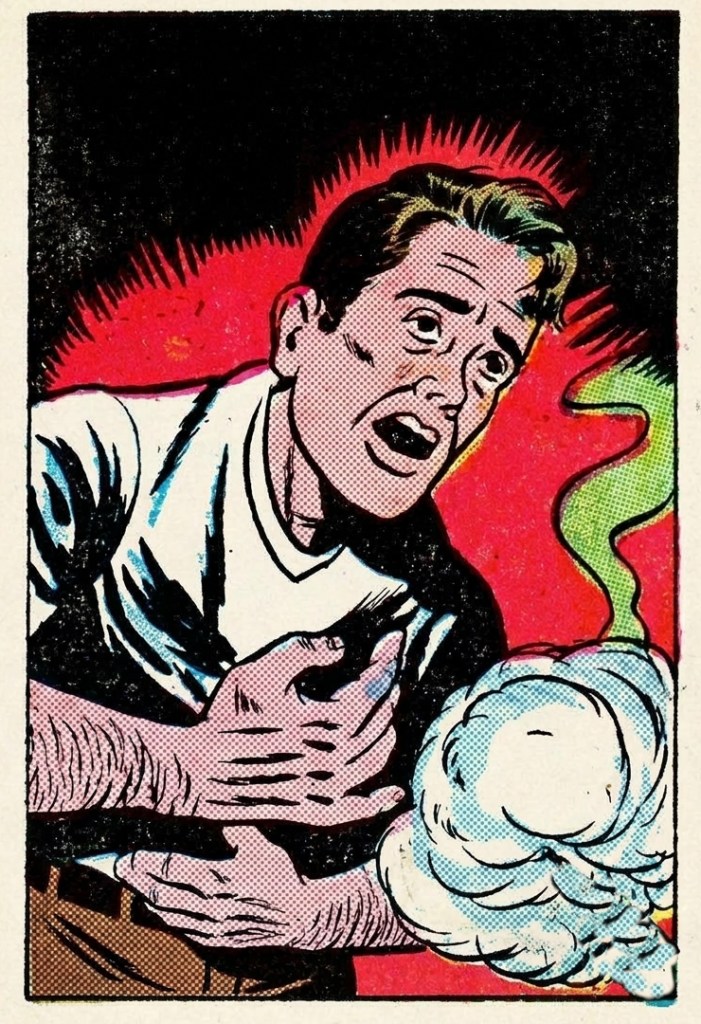
It’s his legs. It’s like he’s wading through a knee-high rapids. He’s clumsy and can’t quite find his footing. But he finds his way into the bathroom, heaves open the toilet lid and vomits.
Urban’s wife, Pauline, wakes up groaning. She turns on the lights. Urban braces himself on the door jamb. He asks her if she left the gas on the stove on. She tells him she doesn’t think so. When she goes to check, she discovers her legs have lost much of their strength. Still, she checks the stove. It’s off.
The Raefs agree something is wrong with the air. For the next agonizing minutes, they struggle to open the windows in the house in an attempt to vent the odor.
All the activity wakes up Raymond Jr. They ask him if he’s alright. He nods politely, watching his aunt and uncle behaving strangely. He says he doesn’t notice any fumes or odd odors.
***
Whatever happened, Urban is shook up by it. He sits down on the porch to get some air and wait for the pounding in his chest to smooth out.
He goes back inside and tries to reclaim some of his sleep. He lays in bed, studying the shadows of the window on the ceiling cast by the streetlights.
As if he didn’t have anything else to worry about, now he’s got this gas leak or whatever the hell it is. Maybe it really was his own nerves getting to him and he’s going crazy. That is more comforting somehow. If he could just be committed to an asylum and all the burdens lifted all at once. That sounds nice.
Yes, it’s probably his nerves. That’s all. Still, that smell. It was sweet, and overbearing. He’s sure he didn’t imagine it, though.
It’d been cloudy and cooler today. It’d even rained a bit. Maybe it was just the smell of the flowers in the garden outside the window, or something coming off the field just a block away.
Urban doesn’t feel the need to call the police. Just one of those odd things that ultimately works itself out.
But then he starts to get that feeling again. He knows something is wrong, but getting one last glance of the neighborhood outside his window as he lulls back to sleep, he wonders what.
He sits up and looks out the window. He doesn’t know why. Something compels him to do it. It’s just the empty street. Parked cars glistening under the one streetlight. For a moment he thinks he sees something duck behind one of the cars. He squints. He sees something. It’s bobbing behind them, like it’s hiding. He sits up and walks to the window, close enough for his breath to leave a film of vapor. He squints harder at the thing. Then it comes into view. It’s just the bush in the yard across the street swaying in the wind.
Urban takes a deep breath and shakes his head. He feels silly. He lays back down, pulls the covers over and goes back to sleep.
September 1 (Friday)
1408 Marshall Avenue.
11 p.m.
Aline Kearney goes to bed with her daughter. Her sister, Martha Reedy, is in the living room. Aline’s other daughter and Reedy’s son are in another part of the house, asleep.
The weather was fair today. A cool breeze sweeps through town, so she cracks open the window.
Not long after going to bed, Aline notices a sickening, sweet odor in the bedroom. At first, she thinks it’s the flowers outside the window. But the scent grows stronger over the next few minutes. The air starts to become thick, and her throat feels dry and her mouth burns.
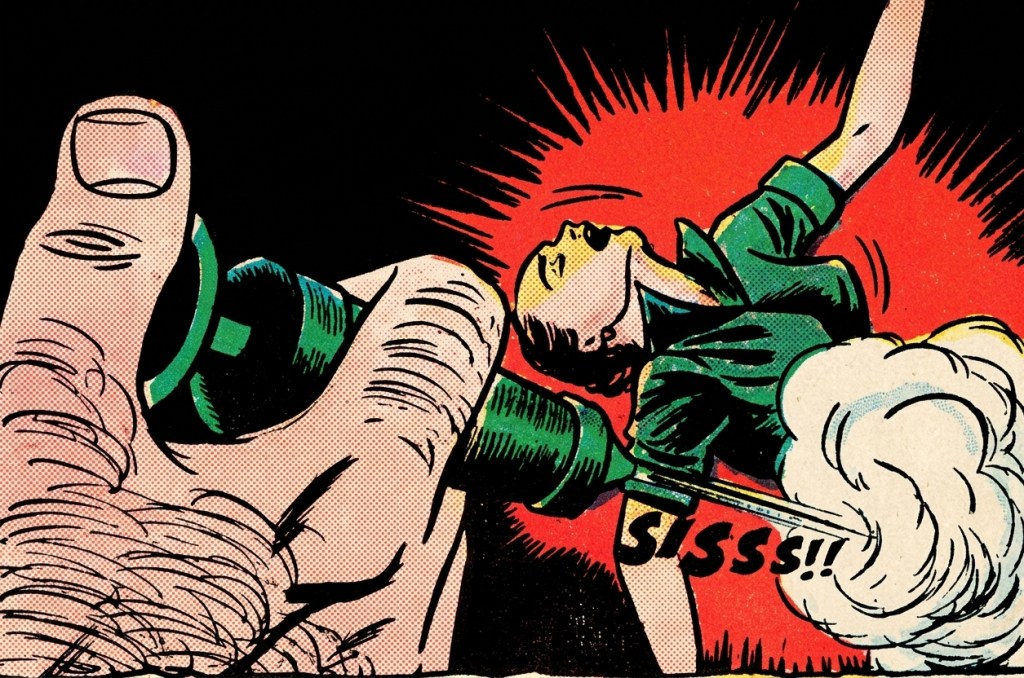
She goes to investigate and realizes she’s lost feeling and strength in her legs and the lower half of her body. She can’t, no matter how hard she tries, get out of bed.
Aline screams for her sister, who dashes into the bedroom. Martha also notices the thick, sickly sweet fumes.
She runs over to alert a neighbor. But they already called the police after they, too, smelled the odor and became sick. In the meantime the neighbor searches the yard and neighborhood, but finds nothing amiss.
The police arrive shortly after. They also search the yard, and the neighborhood, and come up empty-handed.
After midnight.
Aline’s husband Bert, a taxicab driver, returns home after learning about everything that happened from a local cop.
He’s pissed off. Pissed that someone tried to break into his home, pissed that someone was trying to get to his wife and kids, pissed that he’s missed out on a night’s pay.
Bert slams the door of the cab and marches up to the front of the house. That’s when he sees them—a person.
They’re at the bedroom widow. His bedroom window. The interloper is tall (it’s hard to tell in the dark). They’re dressed in dark clothing and wears what looks to be a tight fitting cap. Bert calls out to them, yells what the fuck they think they’re doing.
The intruder snaps in Bert’s direction. It’s too dark to make out facial features. Even if he got a good look, it doesn’t matter because they immediately turn and run.
Bert chases after them, but whoever the trespasser is, they’re fast, and they easily outpace Bert.
Bert does his best, but by the time he reaches the end of the block, he’s out of breath. A career as a cab driver hasn’t equipped him well at running.
The Kearneys call the police again. They conduct an even more thorough search this time, but once more were unable to find anything, or anyone. But by then, Aline regained full use of her arms and legs with no residual side effects.
A reporter with the local paper working overnight, shadowing police on the crime wave in town, tags along with the unit dispatched to the Kearneys, and they speak with Aline.
2508 Prairie Avenue.
At the same time Aline Kearny is getting ready for bed, Beatrice Rider is at home with her son and getting ready to retire. But when she enters her bedroom, she is also overcome with a sickly sweet odor. She becomes lightheaded from the smell. So do her children.
Despite being in another room, the Rider children become restless from the fumes and then nauseous. Beatrice opens more windows to try and vent out the smell.
She tells her husband, George, about it when it comes home from work at the post office.
George Rider is also a softball commissioner for the tournament happening tomorrow along with Urban Raef, in fact, he’s the president of the whole commission. He’s also a member of the Knights of Columbus, and they go to the same church.
When Beatrice informs George of what happened, they call the police. When officers arrive, they note that the Rider residence is no where near the home of the Kearneys. If this incident was in any way related to what happened to the Kearneys, where a man was seen fleeing at the same time as this, then there might not be a single assailant, but two… or maybe more.
September 2 (Saturday)
The account of what happened to Aline Kearney hits the local paper. The editors have already given a name to the assailant, as yet only seen by Bert Kearney: the anesthetic prowler. The people of the town give him another: the mad gasser.
The story comes as a shock to the people of Mattoon. They’d already been dealing with a spree of burglaries, mostly of shops in town.
Stealing is one thing, but now someone is spraying the people—and children—of Mattoon with an apparent poison. From their windows. Into their bedrooms. While they sleep.
The headline reads “first victims.” Well, that implies there will be more. Those two words are enough to set the entire town on edge.
Running alongside the debut of this mad gasser are updates from the war in Europe. American and allied troops, who landed in France only a few months ago, are about to enter the German homeland for the first time. The Nazis send a warning: if allied armies enter Germany, they vow a swift and brutal reckoning.
Earlier in the week, a Nazi POW being held at a military base in Springfield escapes his captors the previous Tuesday. Police found the German prisoner at a tavern in Peoria on Friday night. Whatever he did in that time, authorities can’t say.
The Germans say they’ve applied themselves to a suite of special weapons, which they’ve said they want to use on Americans, in America. Wunderwaffen, they call them.
Nazi propaganda proclaims technological wonders like things seen in Buck Rogers. Beam weapons. Rockets. Bombs that can level whole cities.
The War Department, though, is worried about more practical weapons and desperate tactics. Smuggled agents and stolen dynamite to blow up bridges and railroads. Releasing germs in Times Square. Chemical weapons.
Could the recent attacks be the start of Nazi plot to cripple the United States? Right here in little Mattoon?
It sounds ridiculous. Mattoon is far from critical in strategic importance, but still it produces many important components for the war effort. Diesel engines and shells come from Atlas Imperial. Sheet metal from Raef and Beall. Brown Shoe Company makes footwear for the troops. And more from the other factories in town. Think of the propaganda value of such an attack. Americans, even deep in the Midwest, are not safe from the Third Reich. No one is safe.
Regardless, the Kearney article prompts others, like the Raefs and Riders, who now realize they might have been victims of an attack, to step forward and speak about what happened to them the previous nights.
That includes Olive Brown, who said she experienced a similar event several months before, but never reported the event because of how silly it seemed, but when she read about the attacks in the paper, she called it in. It was typical of the events that happened already: late at night, after midnight, Brown reckons. She and her daughter were stricken by a sweet smelling vapor that came through the window and made them sick, but, like the others, recovered quickly afterward.
But it’s Labor Day weekend now. Everyone is off. Even the printers are down. The public won’t know about these incidents for another three days.
September 4 (Monday)
The softball tournament organized by Rider and Raef ends to great acclaim. Its organizers say the crowds at the closing game on Monday were the largest ever seen in Mattoon for the sport.
Unfortunately, the Mattoon team, made up of guys from Atlas Diesel fell early to Champaign team from the U.S. Navy Diesel School, which went on to win the whole tournament.
***
Urban Raef is feeling good now, maybe for the first time in a while. He’s staring at outfield from the stands. Island Grove takes an early lead. But in the seventh, Navy scores two hits. Island Grove can’t get it going again, and it all ends at 6-5. A good game. A nail-biter. A game worth sitting through.
Under the lamps that make the field shine like midday, even though its nighttime, and it’s that time of the year when he can feel the nights getting longer. After this year, he is happy to put his mind to something else, put out everything, and replace it. A hotdog. Cigarette smoke. Spilled beer. Women’s perfume. Karl Mosley’s commentary over the loudspeakers for the doughy industrial workers pantomiming the national pastime. Good, old fashioned fun.
People are laughing and smiling again. The war will be over soon, he hopes, and peopel can start to get back to things like this again. He starts thinking about his plans—for his business, at the Knights of Columbus, and the Commerce Commission. Shit, with how good this thing was, he’ll have to start planning now if there’s going to be a tournament next year.
For the first time in a while, he feels good, genuinely. But then there’s that other feeling, that sense of what can go wrong itches him in a place he can’t scratch. The wind shifts can he catches a smell. That smell. He gets a whiff of a woman’s perfume again, but it’s different now. In the odd concoction of a crowd, does he smell it now? Is that it? What came through his window the other night?
He looks out again from the stands, beyond the field bright as if caught in a flash bulb. At the lone lights on porches and back doors. Headlights. So much black between so few the points of light. So much more of one than the other when the sun goes down. The city is some rafts tied up on the ocean.
From up in the stands, he sees Leonard Burrell. He’s still dressed in his Atlas Diesel pinstripes. He gives him a wave. Leonard doesn’t wave back. He’s pushing his way through the crowd, like he’s trying to escape. Something is wrong. But Urban sits back. He’s too far away and he’ll find out later anyway.
A slim band of evening slips away from the horizon. Indeed, the nights are getting longer now, and something stalks at the margins. Beyond the floodlights. Why does he think this? He doesn’t know why, he just knows. He can feel it now.
Later that evening.
809 N 13th Street.
It’s after dark. Marjorie Burrell wakes up in a coughing fit. She’s struggling to breathe. There’s a strong smell in her room, and it’s coming in the through the window. She chokes on the fumes. All she knows is it’s strong and she struggles out of bed and out of the room. She nearly collapses. Whatever it is, it’s in her legs.
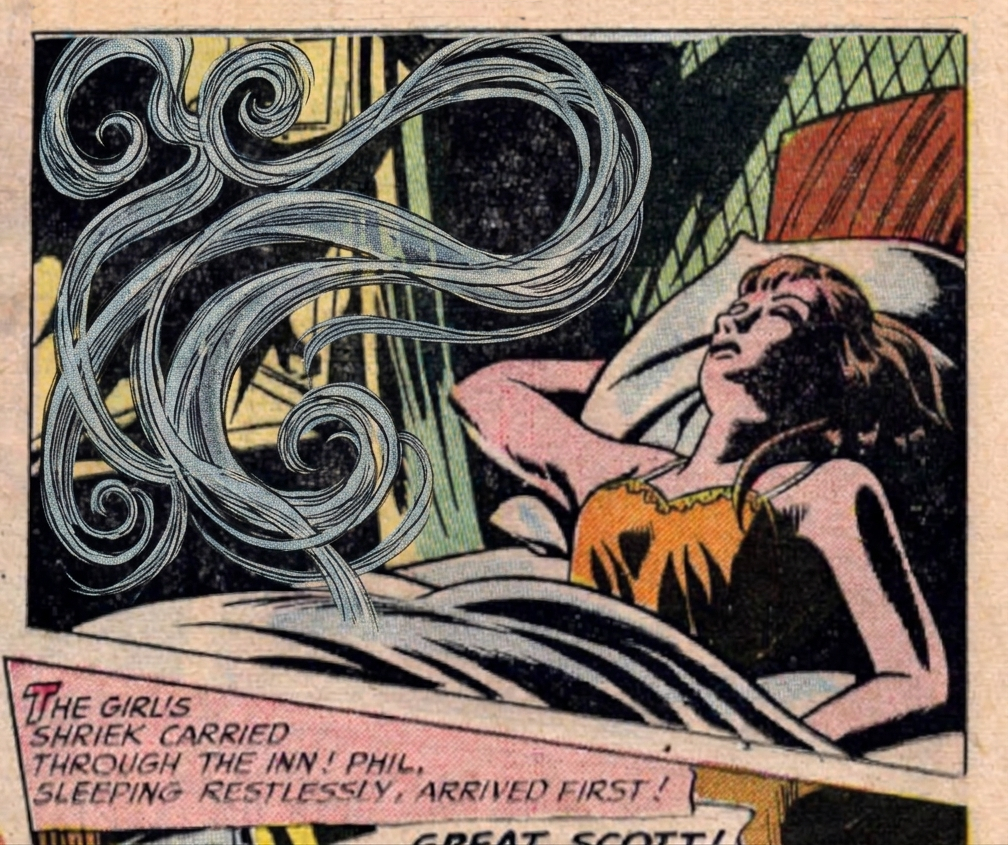
She takes her 18-month-old son, Dennis and flees to a neighbors home, where she phones her husband.
Leonard works at Atlas Diesel and was at the softball game. Marjorie left early to put their son to bed. When she’s overcome by the odor, she calls the police.
She has soreness in her chest for the next several hours, but suffered no additional side effects.
September 5 (Tuesday)
All the reports from last week come out—the Raefs, the Riders, the Burrells and everyone else. Whatever good feelings and distraction the tournament brought, it can’t compete with the emerging fact that something very wrong is happening in Mattoon.
That evening.
921 N 21st Street.
The night after the softball tournament. Beulah Cordes and her husband Carl arrive home around 10 p.m. and enter through the rear entrance. They take off their coats and settle in for the evening in the living room.
Carl fixes himself a drink and takes out the paper. It’s quiet. Beulah can hear the breeze against the siding and little rattles on the window.
She still isn’t used to the quiet. It’s been some time since it happened, and she wonders when it’ll feel normal again. There’s no such thing as normal when something like that happens, she’s certain. Maybe Carl feels the same way. She doesn’t probe too much anymore. He’s been managing in his own way.
Stirring the high ball with a spoon, Beulah wishes Carl would take her in his arms again, just to let her know everything is OK. Though, how can anything be OK after what happened?
Beulah looks into the front porch window. They perfectly mirror the lights inside. She sees herself sitting in a chair, and Carl sitting across the room, undoing his tie. She wonders if the world cast on the other side of the window pane is different somehow, even in small ways, and how one would go about moving there, where things might be a little better. Where Louise is still alive.
Just a few years ago, the Cordes had been at their cabin on Mattoon Lake just a few miles south when their adopted daughter, Louise Turner shot herself in the chest. Louise suffered from a lifelong heart condition and was sick for over a year, but no one really knows why she did it.
The gun shot didn’t kill her. The bullet didn’t strike her in the heart, but it may as well have. Emergency personnel came and brought Louise to the hospital. There she stayed, in critical condition, for many months. And almost a year to the day she tried to end her own life, she had a heart attack and died.
Every May since, the Cordes, who had no children of their own, run a memorial for Louise.
Beulah wishes she could say that was the worst of it, but it isn’t. A year after Louise died, Carl was indicted on gambling charges and arrested along with 13 others the following year for operating an illegal gambling house in his business, the Union Tavern.
Carl continued to run the popular bar for a time. But due to his own declining health, he was forced to sell it in 1942. The Union was a source of pride for Carl. He liked having an independent source of income after working for the Illinois Central Railroad. After selling the Union, Carl tried to run for local township office, but found that to be too burdensome and withdrew.
They’re getting old. Beulah sees it in her face, certainly, and in Carl’s. This should be a time in their lives where things get easier, but there are only more burdens. And the worst of them all is the silence in their home.
Beulah is studying her own face as she confronts these facts when she sees something moving in the porch. It’s small, and it billows in the wind. She’s not sure what it is and leans in close. A piece of trash, it seems, applied itself to the front porch window. It’s laid out flat against the screen door.
She goes to examine it. The white cloth was big, larger than a man’s handkerchief. There’s a large wet pink spot in the center inside the fold. For reasons she isn’t able to articulate, she brings the cloth to her nose and smells it.
There’s an immediate, gruesome effect. The fumes coming off the rag, once inhaled, are like coming into contact with an electric current. The pain races down Beulah’s body and seizes her legs and she collapses.

Carl, who’s been obliquely watching these events unfold over the edge of his newspaper, rushes over to Beulah, and he has to drag her inside and lays gently her on the living room floor. Carl phones the doctor. He’s already made the connection with the story in the paper of the mad gasser.
Beulah’s mouth and throat are on fire. Soon, her lips swell. She starts coughing and a pink mist of blood sprays out of her. She wonders if she’s about to die. For a moment, she thinks how that would be alright.
September 6 (Wednesday)
Beulah is feeling better, though her lips and face were still swollen. To raise the profile of her attack and in hopes that it will lead to the capture of whoever was responsible, she talks to the paper the next day. She shows a reporter her wounds, which are undeniably real.
After the incident, Beulah finds some evidence near the scene. At the edge of the front porch, she finds a worn skeleton key and a large tube of lipstick with the contents nearly gone.
Police take the cloth from the Cordes’ home to analyze it. Mattoon Police Chief CE Cole doubts the cloth would yield the answer to the drug used on Beulah. Still, the police hold on to it.
But there’s a more promising lead the police are pursuing.
Following the attack yesterday, the police pick up a man near the Cordes’ home.
They ask him what he’s doing there. He claims to be lost. Because they have no evidence connecting the man to the scene, they’re forced to release him, but in the process the officers forget to record the man’s name and description.
***
Tension is settling on Mattoon. People who live alone decide to room up with friends and family as the attacks continue, and Thomas Wright, Mattoon’s police commissioner, is a little out of sorts.
He thinks his colleague, police chief Cole is too cavalier regarding this gassing case. Cole maintains that there is no evidence, and that it’s people running away with their imaginations—some combination of anxieties about their loved ones in the service, threats from the Nazis and the Japanese, and the wave of burglaries.
It’s been one week since the mysterious gas attacks began. Despite pronouncements in the paper, there isn’t much evidence to suggest that anyone is responsible for these “attacks.” The only witness to an actual assailant is Bert Kearney. Kearney is as trustworthy as anyone in Mattoon, but he’s only one man. And if the current theory is that there are multiple gassers, then there should be more sightings of them, and there aren’t.
But the growing number of victims is stirring up the newspapermen. The newspapermen are putting public pressure on the mayor, EE Richardson, Wright’s boss, especially after what is being described as an attack on Beulah Cordes.
Richardson, also a physician, thinks there might be something to the gassing theory, suggesting that the substance might be mustard oil, which, by his assessment, gives off fumes similar in description to that given by the victims and causes numbness.
The story of the mad gasser is picked up and reprinted in newspapers in larger cities, and the story gets to the Army’s chemical warfare service in Chicago, which told reporters it could be chlorpicrin, a chemical commonly used by exterminators, which also has a sweet smell.
Still it’s all guesswork at this point, and now Wright is expected to do something. To act on, not just imperfect information, but hardly any information at all. But he can’t do anything without Cole, who runs the police day-to-day. Wright is just a public servant, a pen-pusher. But Cole is also turning into his biggest obstacle. Even if Wright agrees with Cole that the evidence of a mad anesthetist is insufficient, he still has a job to do, and Cole is stopping him from doing it.
Cole is annoyed by the whole situation. Still, he agrees to bring over some of the day shift to bulk up nighttime patrols.
He’s less concerned about some mad gasser nonsense than he is about the growing number of “volunteers” showing up at his station to help out, with heirloom rifles, clubs or whatever else they can find.
Some of the guys are still jumped up from Sheriff Hougland, who deputized them in the rural parts of Coles County a little while ago to address the burglary problem out there. That was less about preserving law and order and more about unleashing the mob to do his job for him. On that Cole and Wright agree.
The mobs are all men too young or too old for the service. They work all day or don’t work at all, and they’re looking for something to do. All they ever seem to find, though, is trouble.
Every night now as the number of “victims” increase, there are more of these men drunk on boredom, anxiety, or both.
Cole just tells them to go home, but every night they’re getting harder and harder to disperse. So he meets Wright in the middle. He gives him some leeway now so he might not have to be ordered later.
With him and Cole on the same page, Wright also requests urgent assistance directly from the Illinois Department of Public Safety to help investigate the mad gasser.
The Department gets back to Wright promptly, and informs him that it’s sending two agents to Mattoon to take on the case, and that they will arrive that day.
***
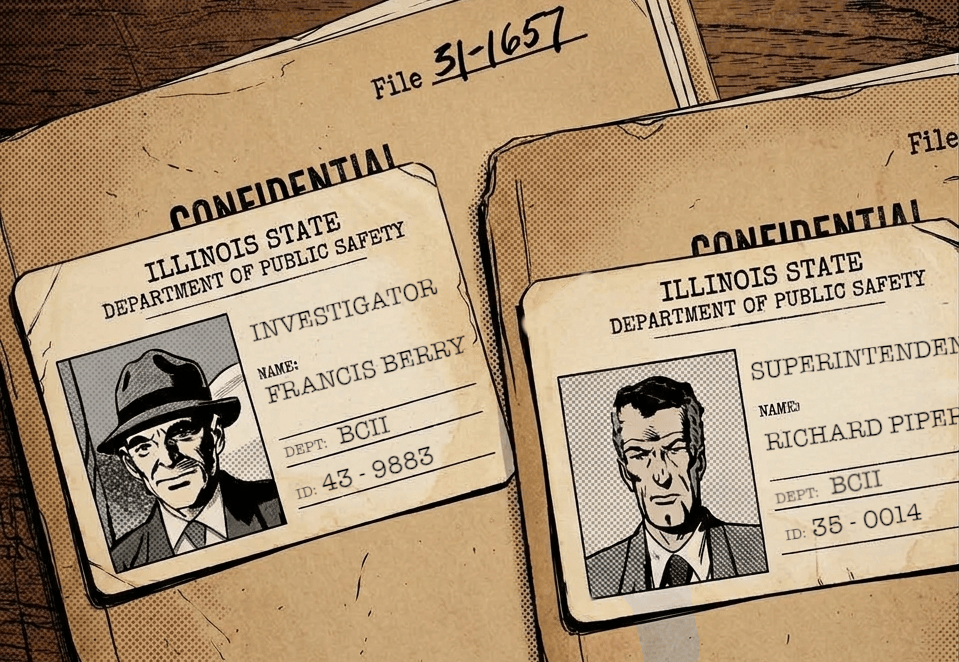
Two investigators arrive in Mattoon by the afternoon. They are Richard Piper, superintendent of the Bureau of Criminal Identification and Investigation from the Illinois State Department of Public Safety and an investigator from the same department named Francis Berry.
Around the same time, an agent from the FBI also arrives. He takes no active part in the investigation. However, he says the bureau’s primary interest in the case was uncovering the gas used by the madman on his victims. Some say he’s there to keep an eye that the gassing isn’t an Axis plot, but that is never fully determined.
More reporters from Chicago also arrived to cover the story throughout the day.
Piper takes possession of the cloth found by Beulah Cordes and sends it to a state laboratory in Springfield. Piper wants to return to Springfield that day, but also wants a chance to speak with some of the victims.
Piper tells Wright and Cole that this is the strangest case he’s ever encountered in his years of police work. Still, he falls into the mass hysteria camp. A similar case occurred in Springfield a few weeks ago for a supposed sex offender that wasn’t real.
Both Piper and Berry leave that evening for Springfield.
Later that night.
Cole receives multiple reports of the mad gasser, all in different parts of the city, including one within a block of the Kearney residence, where all of this started.
And, yet, no prowler is caught.
A mob corners a man in an alley just because they discovered him walking alone. Cole has to save him from the crowd. He’s just an out of towner working in one of the munitions plants on his way back to a boarding house. He’s a little loaded from one of the taverns, but otherwise harmless. This is what he’s feared.
Then there’s a report of an attack.
***
Ardell Spangler, an employee of the Brown Shoe Company, is asleep at home around 10 p.m. when sickly sweet fumes enter her bedroom. The gas seizes up her legs and she falls ill. Just like the others, Cole thinks.
She grabs her shotgun and runs outside to confront the gasser, in her stocking feet. She doesn’t see anyone. She goes back inside and reports the gassing to the police. She keeps her shotgun by her bed, loaded. A lot of other people in Mattoon do the same.
Two hours later, Laura Junken, the manager of the Big Four restaurant in downtown Mattoon, leaves the cafe and goes to her apartment, located at the rear of the business. Inside, she smells something like cheap perfume coming from the four-inch gap of her open window.
You can guess what happens next, Cole thinks. Weak legs, nausea, burning mouth and throat.
Then there’s Glenda Henderschott, an 11-year-old who’s visited by the gasser. She wakes up nauseated in her sleep. Two hours before, her parents report to police a suspicious person standing near her bedroom window.
Fred Goble also wakes up feeling ill. His neighbor, Robert Daniels, spots a tall, thin man running from Fred’s home.
And three more homes were visited.
They should give this madness a name, Cole thinks. They should call it Mattoon Syndrome.
September 7 (Thursday)
State agents Piper and Berry return to Mattoon in the afternoon. They don’t bring good news.
After analyzing the cloth found on the Cordes’ property, a state chemist tested the stains on the cloth for all known substances but results are inconclusive.
The public is losing patience. While newspaper columns extol the effort of local law enforcement, the citizens of Mattoon grow increasingly anxious at each arrival of night, and the mobs continue to grow.
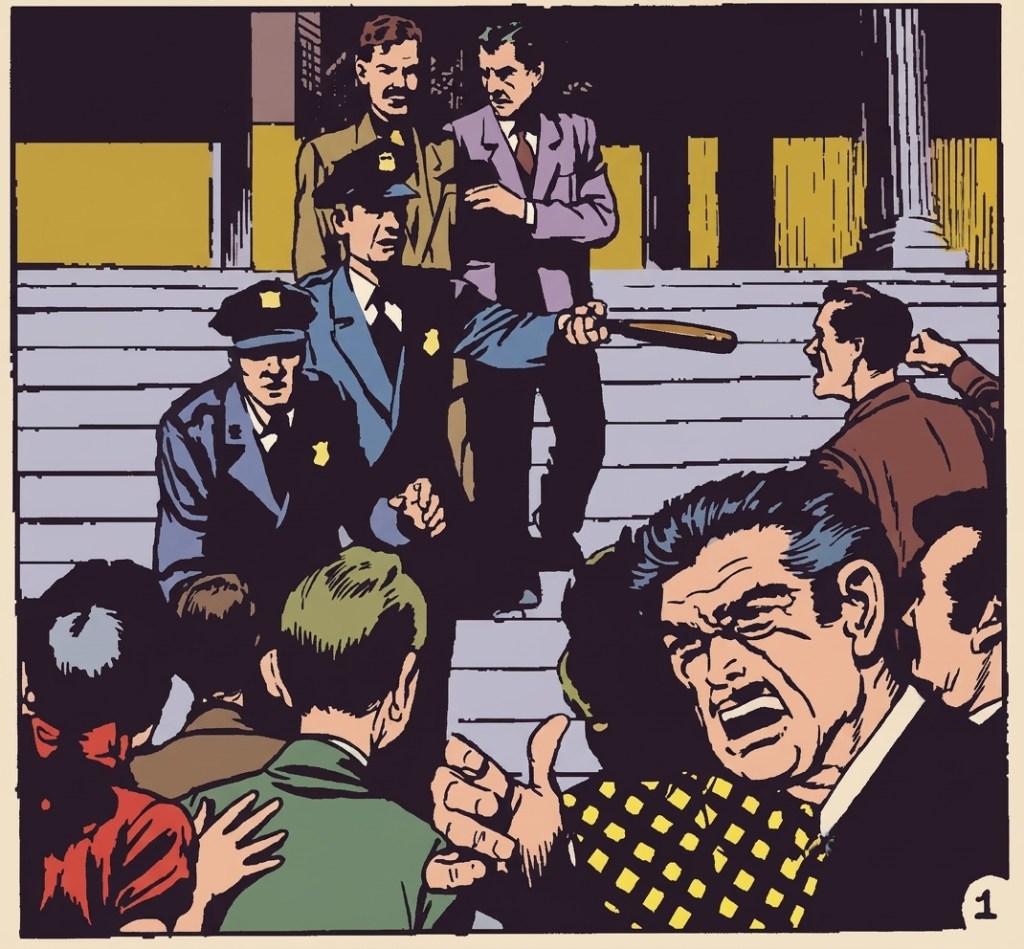
They wait outside city hall for police cars to leave when called out to homes reporting gassings and prowlers. The follow close behind and they gather outside the homes of the victims. Bands of men rove the city with loaded weapons. It’s a powder keg ready to go off.
So far tonight, though, it’s quiet.
The only call to come in for the moment is from Hiram Weaver. He’s was patrolling his yard and a neighbor’s property, looking for the prowler, when he falls into the stairway of his open cellar. He didn’t find the mad gasser, but he fractures his left hip.
But, as they say, it’s a calm before the storm.
17 Westwood Street.
Frances Smith, the principal of Columbian Grade School and her sister wake in their beds, gasping and choking.
They turn on the lights. A thin, blue haze hangs on the air in the bedroom. It smells like a concentrated flower perfume.
They also hear a buzzing sound coming outside the window, which they believe is coming from prowler’s spraying apparatus.
They’re stricken like the others, but manage to call the police.
September 8 (Friday)
State agents Richard Piper and Francis Berry speak Friday afternoon. They come up with a profile of the mad gasser. They say he must be mentally unbalanced, but intelligent.
The profile helps the police come up with a list of suspects.
***
Later that night.
The corner of Dewitt Avenue.
Leroy Cook is a taxicab driver in Mattoon. He isn’t taken in by the news of the gasser. Sure, Mattoon is not a large town. But he’s seen some things. Enough that he’s not swayed easily. On his rounds looking for drunks stumbling out of the bars in need of a ride. He’s listening to the radio.
He turns the corner onto Dewitt Avenue, and then slams on his brakes.
The car behind him almost hits him, and the driver lays into the horn. The guy even rolls down his window and starts shouting. But Cook doesn’t notice any of it.
In front of Cook is a towering vapor cloud. At first, he thinks it’s a fire. It’s coming out of a window of a house. But he doesn’t smell smoke. It smells like… something sweet. Too sweet. Like rotting fruit.
He gets out of his car. The driver in the car behind him sees what Cook sees, and he gets out, too. Cars in opposing directions stop as well. It’s just hanging there, in the middle of the street. A crowd gathers to look at it. Then the wind shifts. The cloud seems to topple and spread. People start running as they’re overcome with coughing and choking.
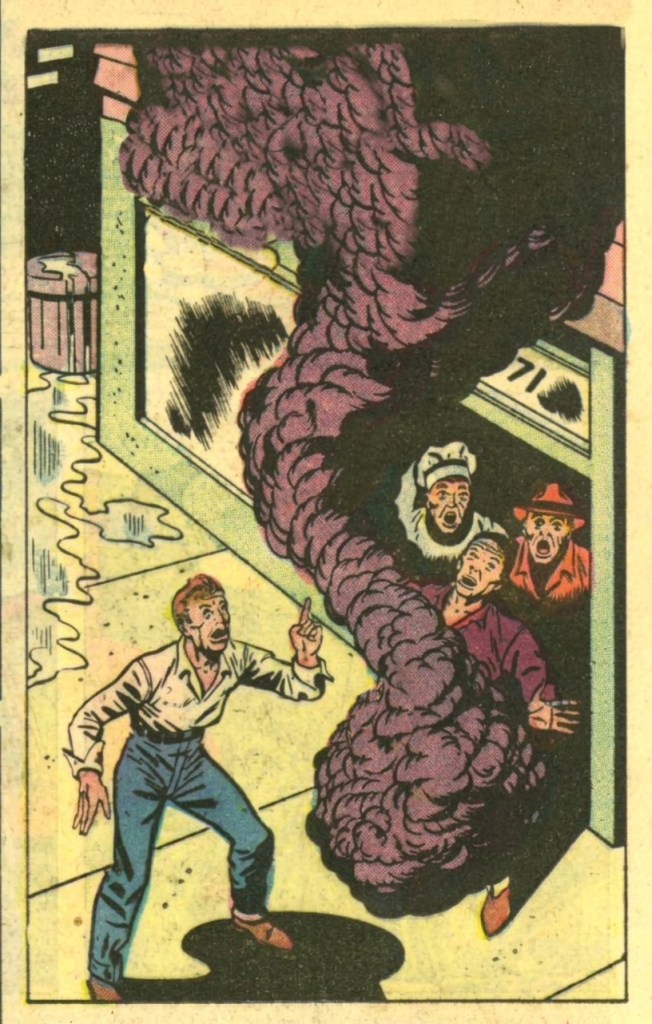
Someone calls the police. But by the time they arrive, the crowd and the gas has dispersed, except for a few anxious neighbors and curious onlookers.
Operating on the witness accounts of those who saw the cloud earlier, police enter the home. It belongs to CW Driskell, who isn’t home. The search inside and find nothing amiss. No gas canisters. No spraying equipment. Nothing. They don’t even smell the gas that was reported, inside or outside the home.
When the police find Driskell, they question him. He works at a factory nearby, and was working third shift. He’s surprised to learn of the event that happened at his home. Police tell him that someone may have sprayed something in his bedroom. Driskell doesn’t report any odd smells.
The responding officers’ theory is that someone tried spraying something inside Driskell’s home and whatever they were using—compressed air or something—had exploded. But there is no residue or apparatus left behind.
September 9 (Saturday)
Morning.
17 Westwood Road.
Up until now, almost all of the reported attacks in Mattoon have occurred at night, under the cover of darkness. But now, they’re creeping into the morning. There’s now no relief for the panic that sets in deeper every day.
At the home of Russell Balley, his wife and three houseguests, including a seven-year-old boy become ill after inhaling fumes that came in through an open bedroom window that smells sickly sweet.
On the same morning, Genevieve Haskell, her son, and houseguests were asleep when they claim a gas was sprayed into the house through an open window and experienced symptoms of parched mouth and lips and vomiting.
Coles County Sheriff JE Hougland tells Police Commissioner Wright and Chief Cole he’s ready to assist the Mattoon Police Department at their request.
Hougland tells them he can supply a large number of men, members of the Illinois Anti-Thief Association to aid the case. The men, he says, have received some police training and have been successful in catching prowlers, livestock rustlers and chicken thieves on county farms.
Wright and Cole don’t like this idea. In this they agree. Cole is especially strong in his opinion on the matter. He wants to avoid the mob from getting any bigger. Things will spill out of control if he suddenly employs them. A panic would turn into anarchy in the hands of a bunch of deputized and jumped-up idiots.
They don’t respond.
Instead, Wright and Cole issue a joint statement telling anyone following police cars leaving the station on calls will be arrested. The same goes for anyone gathering at sites of reported attacks and interfering with police work. Finally, they tell the mob of vigilantes patrolling the streets to go home before they get someone killed.
Most listen, a lot don’t.
Later that night.
The attacks continue. First, the entire household of Stewart Scott and a houseguest became nauseated and feeling the onset of paralysis after smelling a strange odor in their home. They fled to a neighbor’s house and called the police.
Mary Fitzpatrick and her husband are playing cards when she feels overwhelmed with gas and vomited in the sink. Her husband also experienced the same symptoms. They went to Mattoon Memorial Hospital, which pronounced Mary with anxiety.
September 10 (Sunday)
A Mattoon police officer talks to the press, and accidentally lets slip about their list of suspects. Wright and Cole are glad he doesn’t mention anyone by name, but he tells them about their primary subject is an amateur chemist from a wealthy family who’d become anti-social.
Indeed, a young amateur chemist is under surveillance. The police say they are not ready to make an arrest because they want to catch him in the act.
The police deny having only one suspect. Really, they have four. The names of the suspects are never released.
Wright and Cole hold a conference with Illinois Attorney General WK Kidwell in the afternoon. They announce they will check a list of patients released from mental institutions to determine if there were any with tendencies that fit the prowler.
Later that night.
Lucy Stephens retires, along with her sister and her children, who are asleep in a nearby room. They awake to fits of choking and coughing.
Frances Smith, the principal of Columbus Grade School, reports another attack on her home.
Later, two unnamed women from two different parts of town are taken to Memorial Hospital for treatment and examination after they tell police they’d been attacked by the gasser. One said she was attacked in her home, another said she smelled the gas in a movie theater.
Both women are examined and without any evidence of poisoning, they’re set away with overwrought nerves.
Wright and Cole, and the whole of the Mattoon Police force are overwhelmed. There are dozens of more calls over the course of the weekend.
And the vigilantes refuse to disperse. Despite the threat of arrest, they continue chasing police cars and interfering with the investigation. If he tries to arrest them all, there might not be a person left in Mattoon.
September 11 (Monday)
After the deluge of calls, Commissioner Wright announces that all future gassing victims will be ordered to the hospital for examination. Cole agrees.
Five squads of state police, including a state-of-the-art mobile two-way radio unit, under the command of Captain Harry Curtis out of Champaign arrive Mattoon to aid local law enforcement in patrolling the downtown area, allowing local cops to spread out into residential areas.
For Wright and Cole, who’d been leading this effort alone, they may as well been angels sent from heaven.
The order to have victims examined seems to stem the tide of calls. Now that they have to prove their affliction, they stop calling.
September 12 (Tuesday)
All goes quiet. For the first time since the mad gasser sighting began, a morning and a night go by with no reports.
September 13 (Wednesday)
Mattoon Police receive a call 11:30 a.m. It’s from Eaton Paradise.
She screams over the telephone that she’s been gassed. The operator barely shrugs.
The report is handed over to Sergeant Charles Butler, who dispatches city police and an auxiliary unit of state troopers to Mrs. Paradise’s home on Richmond Avenue.
After inspecting the home, the police find no evidence of a gas attack. Instead, they find that Mrs. Paradise spilled a bottle of nail polish remover, and she mistook the odor for that of the poison gas used by the prowler.
That’s the only call that comes into the department that day regarding gassing prowlers.
When word of the spilled nail polish remover reaches Police Chief Cole, he seems to have finally had enough. He’s been harboring these delusions for long enough, and he speaks out.
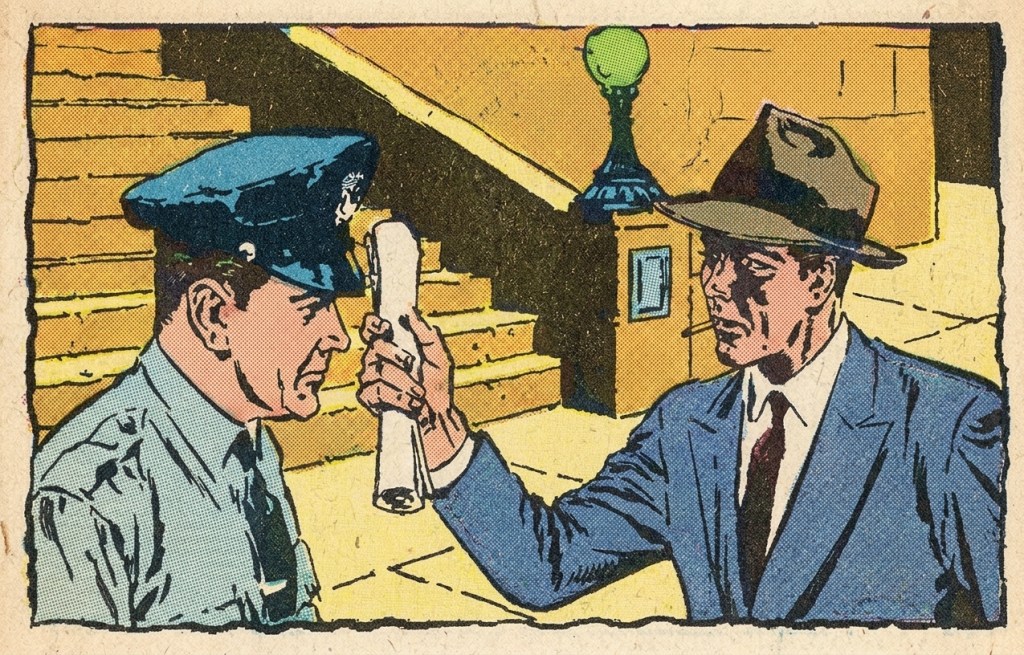
In a surprise announcement, he says there isn’t, and never has been, evidence in any case reported that poison gas was sprayed by anyone.
Instead, he says a possible explanation is that the Atlas Imperial Diesel Company may have released large quantities of tetrachloride, which the company uses regularly and keeps in large quantities, because the substance has a similar smell to that reported by the victims and could leave stains on cloth like that found by Beulah Cordes, and that the cloth probably came from a workman at the plant.
Atlas Diesel is located at 112 N 14th Street, directly in the center of most of the mad gasser’s activity.
The announcement comes as authorities keep the wealthy and eccentric amateur chemist under surveillance. The department says they obtained a warrant for the suspect but they had not made the arrest because they lack legal proof and that they hoped to capture the man at the scene of an attack, which never comes.
WJ Webster, a plant manager at Atlas challenges claims made by Chief Cole, adding that carbon tetrachloride was only used in the company’s fire extinguishers, and that no employee ever complained of symptoms reported by those who claimed to be attacked with gas.
Police collect the 35 victims, including the Raefs, Riders, Burrells and Cordes, and have them smell tetrachloride gas. All but two say that it’s the same as the gas that left them feeling ill and paralyzed.
State AG Kidwell ridicules the idea that there is no mad gasser, and the theory that it was fumes blown from the Atlas Imperial Diesel Company, since no one working in the plant were affected like the victims, nor anyone living in the homes near the works.
Kidwell says he plans to make an inquiry when state and local police are through the case. He says he plans to go back and question the victims that day.
Afterward, he says he’s not sure that there ever was a gasser. He says the initial reports might have been a schoolboy prank that set off a bout of hysteria through the town.
It’s over. Whatever it was is over. There are no more reports.
People return to normal life, comfortable in accepting in the theory that the mad gasser was a hoax.
September 14 (Thursday)
1914 Charleston Avenue.
Midnight.
Edna James can’t sleep. She’s sitting at a kitchen table inside the Lincoln Inn Hotel. It’s called a hotel, but most of the guests have been living here for years. That makes it more of a boarding house, but whatever you call it, she owns it.
She smelled something foul while sitting in bed. What with all the talk of a gasser, it had her worried, but now they’re saying it was all just made up. She panics but then thinks if she, too, is making it up. Still, now she’s awake and so she decides to sit for a bit in her kitchen until she feels tired again.
Some of the boarders are up. They just got off from second shift and are speaking to one another in the lobby around the corner. When they come in for a glass of water or a bite to eat, they say hello and exchange anonymous comments about the weather or work. But she hears them speaking in the lobby. They’re talking about the gasser and how each of them knew it was all bullshit from the start. Just a bunch of women in hysterics. She rolls her eyes. That didn’t stop some of them from joining the vigilante squads.
Edna takes out a deck of tarot cards and starts turning them over. She does a daily read for her son, who’s in the service. The Chariot—victory.
That sets her mind at ease. Then she turns to another topic. What do the fates think of what has transpired in Mattoon these last few weeks?
Cups. So many damn cups. That’s what it’s been every night. She’s learned to not tempt the draw just because you don’t like the hand. The cards have their own methods. They appear when they want to appear. She’s apprehensive. She wants clarity. There’s something in the air. No, not gas. Tension building up. A rubber band about to snap.
She’s always had sensitivities about such things. Whenever she felt it, it almost always turned out to be something other than her imagination.
Edna is in her mid-30s. She was born in Oklahoma City in 1906, before Oklahoma was a state. She married a Texan, Edward, at 20 and had three children. They lived in Beaverhead County Montana for some years.
Then one night Edna woke up. She’d a premonition that Edward would die. He ignored her. Then while doing some errands in town, he was hit by a car and killed.
Luckily for her, Edward saved up some money before he died. Somehow she chose Mattoon as the place for her to settle. It just felt right, she tells people. The Lincoln Hotel Inn was up for sale, and she bought it.
Ever since Edward died, she thinks she has psychic gifts. She’s Mattoon’s only psychic and she offers fortunetelling on the side. But lately her powers have been blunted. She’s clouded, distracted.
She shuffles the tarot deck, and lays out the cards on the kitchen table. She studies the spread. It doesn’t matter which one you take, so long as you reach with intention.
Edna draws in a deep breath and pulls a card out of the sweep, and turns it over. The Moon. Well, she didn’t need to draw that card to get the message. A release of fear. Yes, lots of people were afraid.
She ponders its meaning.
Then she smells it again. That horrible acrid smell. She takes a deep whiff. It’s not her imagination. She’s actually smelling something.
She looks up from the kitchen table, and it’s then she sees it.
It’s right there. Like it’d always been there, like the home had been built around it.
Short. Crouching. Stooped shoulders. Hairy. Sloped forehead.
Its nostrils flare. It pants like a beat horse.
In its black, leathery hands, it holds a spray gun, like one used by the gardeners.
She looks at the face. It makes her think of the ape mask one of her sons wore on Halloween some years ago. There are contortions in the face that grasp toward a smile when it peels back its lips to reveal canines that shine like silverware. A strand of drool extends from its lips and dribbles on the floor.
It is no mask.
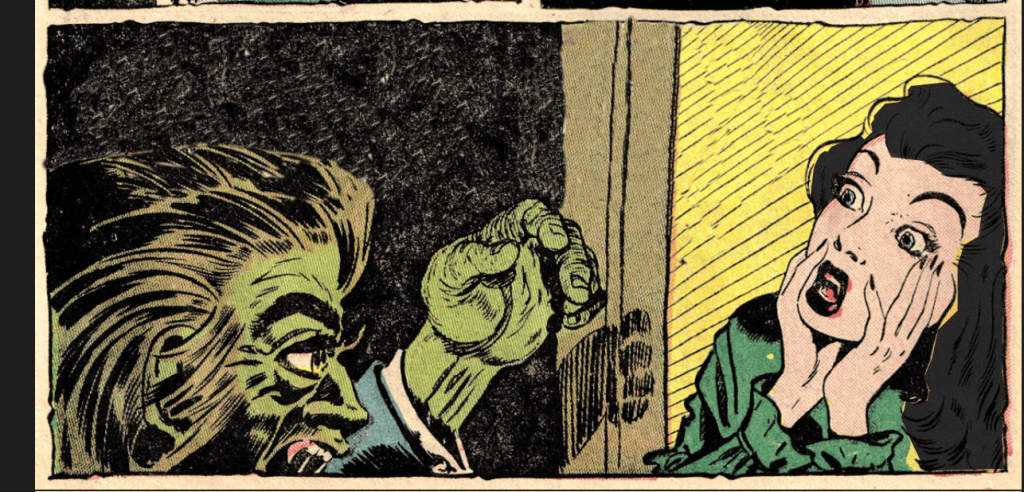
Before Edna can scream, the ape-thing levels the spray gun and depresses the handle three times. The gas coats her mouth and throat. It burns with electric intensity.
Edna’s lungs fill with the poison air and she expresses it all in a bloody shriek. She collapses to the floor, sending the cards into the air.
The droning conversation of the boarders in the lobby is severed and replaced with sound of their work boots pummeling the floorboards toward the kitchen.
Four men come around the corner. They gather up Edna. Through fits of coughing, she points to the corner of the kitchen where the ape-thing stood. But when she opens her eyes, there’s nothing.
The men help Edna up back in her seat. One of them gets her a glass of water. Another gathers up the cards.The coughing fit lasts for a good long while. When she can manage to speak, she asks if they smell it. When they ask what she smells. The gas, Edna, says. The men share worried glances. One, a man named William, who’s always been honest, shrugs and says that he does, a little.
Edna guzzles down the water. The fit passes. She tells them she’s alright and tells them they can go back to their rooms. One of the men straightens the deck of cars and slams them on the table and tells her she should knock that shit off and go to church.
Edna finishes the glass of water and places it in the sink. The smell is as strong as it ever was. She looks out the window. So much dark and so little light. Under a street lamp, she thinks she sees it, the ape-man. It stands under the light and then vanishes into thin air, in a cloud of smoke.
She tries to tell everyone what she saw, but no one believes her.
Well, what else is new?
Think you know the answers
We don’t tell no lies…
You could disappear in smoke
And that ain’t no joke
You could disappear in smoke
And I’m telling’ you that it ain’t no joke
— “Psychedelic Warlords,” Hawkwind


Leave a Reply